

This article explains how the four Hanoi walking routes differ in district character, pace, and what you are likely to notice on foot. It is editorial planning support — not the place to reserve a date. For start windows, meeting pins, the public minimum, languages, and WhatsApp or email booking, use the tours hub and the individual tour pages.
The four options are not different labels for the same lake loop. They separate the French Quarter, Old Quarter, western civic and lakeside landmarks, and food-focused streets into distinct experiences. Operational details change with weather, official events, access, and vendor availability; your written confirmation remains authoritative.
Before you match a neighbourhood, make sure the pricing model is clear: tip-based public walks are not the same product as private quotes or food packages. Read how tip-based walking tours work, then return here for route character.
Route character at a glance
These rows describe route character, not guaranteed stops. Start times, meeting pins, and payment models live on the tours hub and each product page.
| Tour | Route feel | Area focus | Theme | Traveller fit |
|---|---|---|---|---|
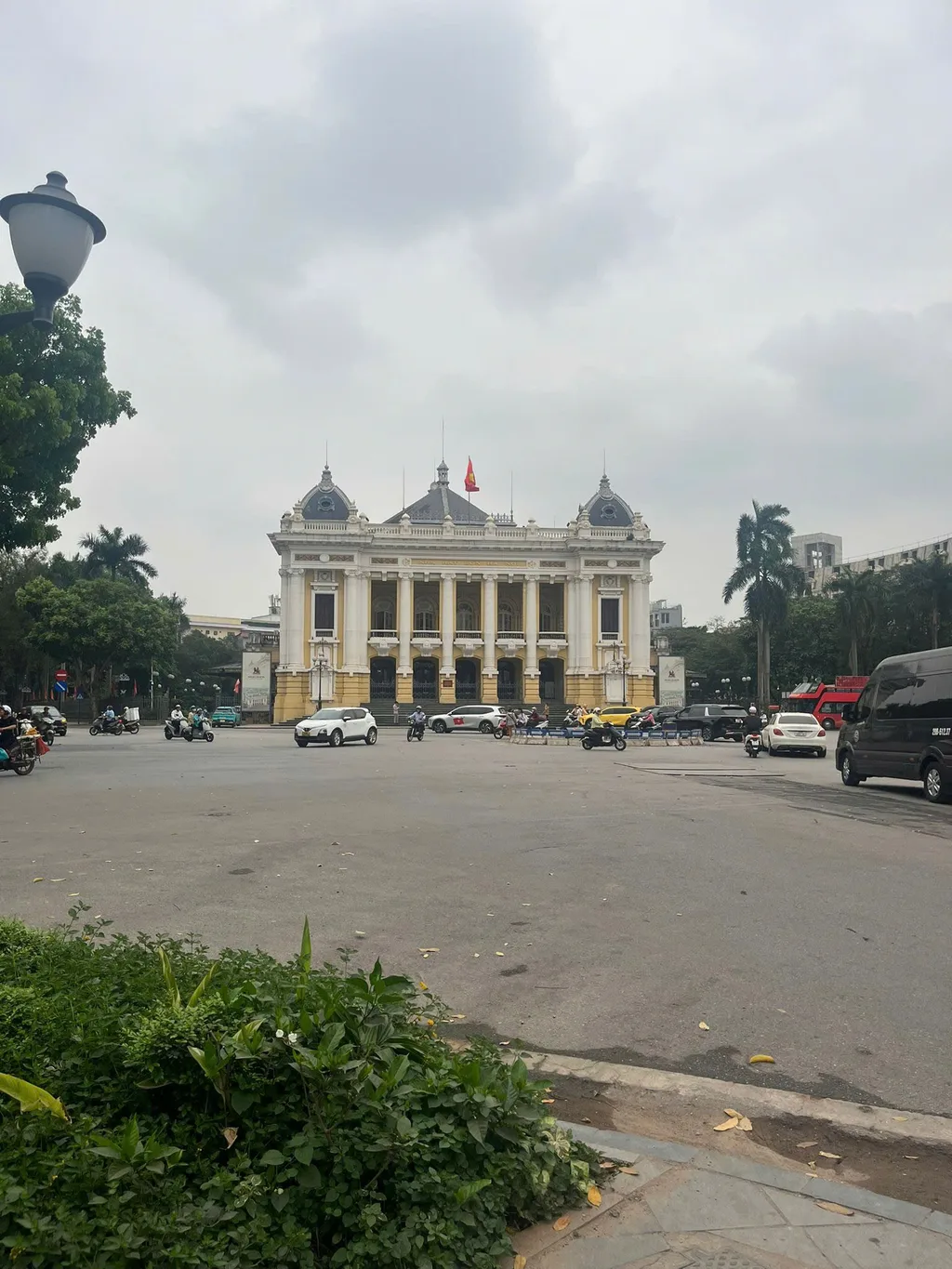
| French Quarter | Hoan Kiem edge → civic buildings → Metropole exterior → Opera House → St Joseph's Cathedral | French Quarter · Hoan Kiem Lake edge | Architecture, colonial-era context, civic space, and the lake-to-boulevard transition | First visitor who prefers broader streets, landmark façades, and historical interpretation |
| Old Quarter | Hoan Kiem edge → market and merchant streets → old gate → Long Bien approach | Old Quarter (Phố Cổ) | Trading streets, markets, craft history, dense lanes, and the eastern edge | Traveler who wants the historic commercial grid and is comfortable with busy narrow streets |
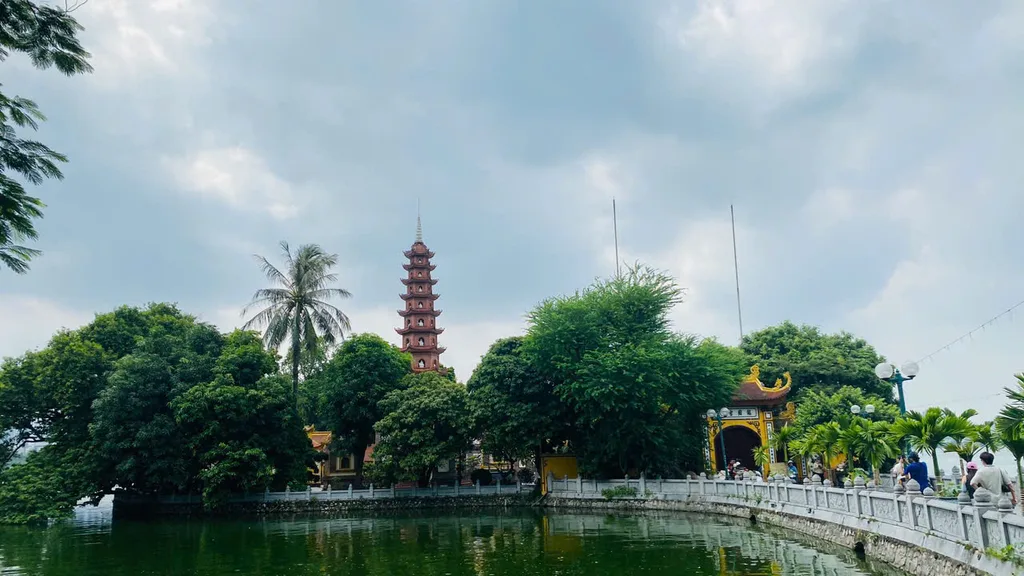
| City Tour | Tran Quoc Pagoda → West Lake edge → Ba Dinh and Ho Chi Minh area → Temple of Literature | West Lake, Ba Dinh & Temple of Literature | Religion, modern national history, civic landmarks, and educational heritage | Traveler who has seen central Hanoi or wants western landmarks connected in one route |
| Street Food Tour | Changing Old Quarter tasting sequence → flexible finish within the Old Quarter | Old Quarter food streets | Food culture, ordering, ingredients, vendor rhythm, and modest tastings | Traveler who wants to eat with local context and can report dietary needs in advance |
Choosing a walk for the time you have
For markets and everyday street life, choose the Old Quarter walk. For architecture and history around Hoan Kiem and the French Quarter, choose the French Quarter walk. For West Lake, Ba Dinh and the Temple of Literature, consider the City Tour and check its separate meeting point. If you would also like a food walk, you could request a morning sightseeing walk and an evening food walk, leaving time to rest between them. These are separate bookings, not a combined package. Check each tour's start time and wait for written confirmation. On the street-food walk, food and drinks are paid directly to vendors; the guide tip is voluntary. There is no guaranteed menu.
Morning versus afternoon start windows
French Quarter lists 09:00 and 14:00 starts. Old Quarter lists 14:00 only. City lists 09:00 only. Street Food lists 11:30 and 17:30. These windows are choices you request — not guaranteed departures until you receive written confirmation and the public minimum is met.
In hot or humid months, the morning City slot and French Quarter 09:00 option usually feel easier because shade and pavement traffic differ by hour. The Old Quarter afternoon window suits visitors who prefer a later start after midday rest. Food walks at 11:30 AM suit lunch rhythm; 5:30 PM suits evening stalls but can overlap with rush-hour crossings — bring patience as well as appetite.
Do not stack a full City Tour and a quarter walk back-to-back without a real break; the City route starts at Tran Quoc Pagoda and does not return to Hoan Kiem. Weather-specific comfort notes live in weather and walking.
Choose the French Quarter for architecture and civic space
The French Quarter tour begins near Hoan Kiem Lake, then follows the change from compact central streets to broader civic and commercial blocks. Hotel and Opera House exteriors, formal streets, and the cathedral create an architecture-led route. The useful theme is not a catalogue of façades; it is how the district's scale and institutions developed and continue to function.
Choose it when you prefer visible landmarks, layered history, and a route that returns context to buildings you might otherwise photograph without understanding. It is also a practical first guided walk for someone who finds the Old Quarter's dense market lanes overwhelming.
Do not choose it expecting the Old Quarter market grid, West Lake, the Ho Chi Minh complex, or a tasting menu. For an independent version before booking, read the Hanoi French Quarter walking guide.
Choose the Old Quarter for the trading grid
The Old Quarter tour turns north and east from the lake into commercial streets, markets, the old gate area, and the approach toward Long Bien. The streets are narrower, pavement conditions change quickly, and everyday trade is more prominent than formal civic architecture.
Choose it if your questions concern guild streets, tube-house frontage, market movement, street naming, and how the historic core still works. It suits visitors who want guide support while learning to cross, orient, and move respectfully through a crowded neighbourhood.
Do not treat it as the French Quarter tour with extra alleys. The themes, street scale, and landmarks differ. If you prefer to navigate at your own pace, the Hanoi Old Quarter walking guide provides three self-guided routes. For reading facades between stops, see Old Quarter shopfronts on foot.

Choose the City Tour for western Hanoi landmarks
The City Tour is geographically distinct. It begins at Tran Quoc Pagoda, uses the West Lake and Thanh Nien approach, continues through permitted public areas around Ba Dinh and the Ho Chi Minh complex, and finishes at the Temple of Literature. It does not begin at the shared lake meeting point used by the two quarter tours.
Choose it when Tran Quoc Pagoda, West Lake, modern national history, and the educational story of Van Mieu are your priorities. It also suits a second-day visitor who has already explored the central quarters and wants the western cluster connected coherently.
The City Tour starts at 9:00 AM and runs for 2.5–3 hours. It is free to join, with a voluntary guide tip. The zero participation fee does not include admission, transport, food, or drinks.
Interior access, security boundaries, ceremonies, and admission are not guaranteed. Arrange transport to the Tran Quoc Pagoda start and away from the Temple of Literature finish. This route is not a loop and should have its own half-day.
Choose the Street Food Tour for tasting and ordering context
The Street Food Tour starts at 11:30 AM or 5:30 PM at the Statue of the Fallen Heroes, directly opposite The Huc Bridge and Ngoc Son Temple. Over 2.5–3 hours, the guide selects an Old Quarter sequence based on vendor availability, weather, group pace, and confirmed dietary information. It can finish at any suitable point within the Old Quarter; a Hoan Kiem Lake finish is not promised.
Choose it when you want help ordering, understanding ingredients and meal rhythm, and connecting modest tastings to the streets around them. It is not the right choice if your priority is reaching a fixed list of landmarks.
The public option is free to join with a voluntary guide tip, but its confirmation—not this comparison—must explain how tasting costs are handled. Private arrangements are available on request; inclusions and pricing are confirmed when you arrange the booking — see the Street Food tour page.
Report allergies and dietary restrictions during booking and repeat them before the tour. A guide can assess and communicate, but shared grills, broths, fryers, utensils, and preparation areas prevent a general guarantee of allergen-free food. For independent planning, use the Hanoi street food guide and What a Hanoi food-stop table looks like.
Match the route to mobility, weather, and confidence
The Old Quarter and food routes use dense streets where pavement may be occupied. The French Quarter generally offers broader blocks but includes large crossings. The City Tour covers separated western landmarks and does not return to its start. None should be described as step-free without a route-specific accessibility check.
Ask the team before booking about current distance, rest opportunities, stairs, seating, toilets, and whether the pace can suit your group. A duration alone does not describe effort. Heat, humidity, rain, crowds, and repeated crossings can make three central kilometres feel more demanding than the number suggests.
For a self-guided multi-day framework, read things to do in Hanoi on foot. It explains when a short taxi or app-booked ride is the sensible link between walking areas.
When you are ready to book
Return to the tours hub to compare operational facts side by side, then reserve from the tour page that matches your choice. Use meeting-point and preparation for identifiers, office versus start pin, and arrival habits.
The best route match is the theme you would still value if one stop changed: French Quarter for architecture, Old Quarter for trading streets, City Tour for the western landmark line, or Street Food for eating with context.
Sources & last verified
Change note: 10 October 2026 — Public start windows aligned to owner-confirmed schedules (OQ 14:00, City 09:00, FQ dual, SF unchanged); route photos from 9 October unchanged.
- Free Walking Tours Hanoi tour pages — Route themes, start windows, and model language reconciled 29 July 2026.
- How tip-based walking tours work — Tip and channel clarity companion article.