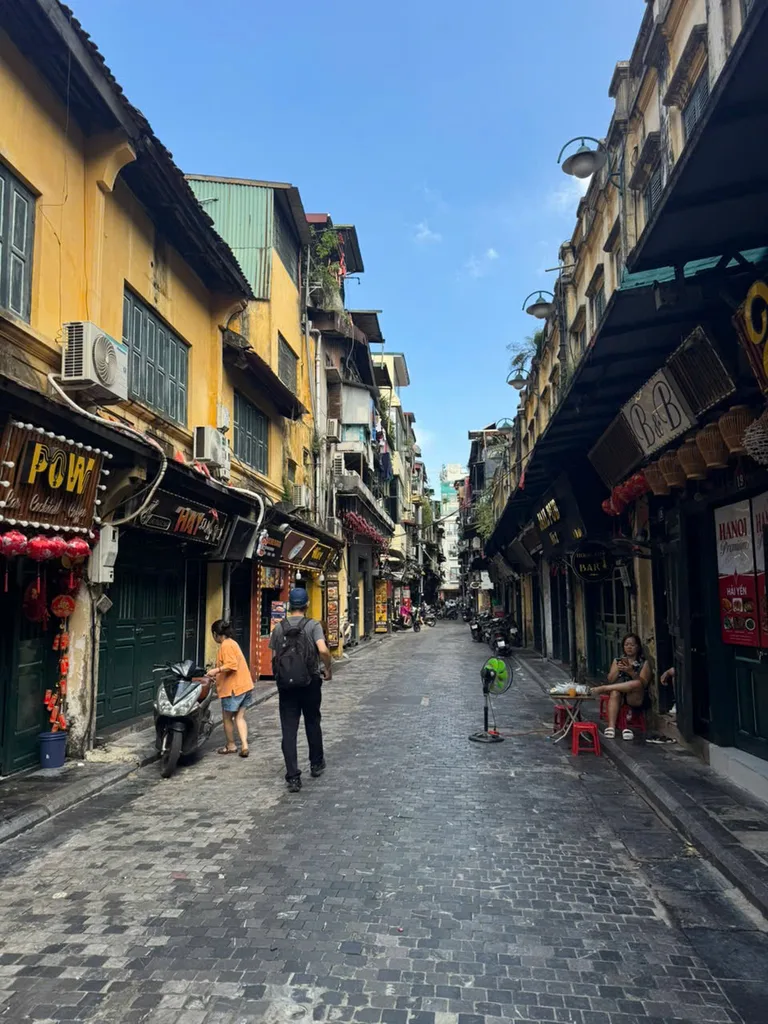
Visitors often describe the Old Quarter as “busy” before they can say why it feels that way. Part of the answer is visible at eye level: narrow plots built deep behind short frontages, signs stacked vertically, goods spilling onto the pavement, and motorbikes parked in every usable gap. You do not need an architecture degree to read the pattern — only a willingness to walk slowly and look up as well as ahead.
This note is for walkers who already plan to explore Phố Cổ and want a simple visual vocabulary for the streets. It complements the practical Old Quarter walking guide, the heritage context at O Quan Chuong Gate, and market-focused shopping notes in Best shopping places in Hanoi. For a guided introduction to the lane network, see the Hanoi Old Quarter Tour.
Tube houses: narrow front, long depth
Many Old Quarter buildings follow a tube-house logic: a modest street frontage with rooms and courtyards extending backward. From the pavement you see one or two storeys of shop, sometimes a balcony or shutter line, then a roof profile that does not reveal the full depth behind.
That shape explains why streets feel vertically stacked. Signs compete for height, cables cross between facades, and light wells or internal courtyards — invisible from outside — let daylight reach inner rooms. When you compare two neighbouring fronts, notice how party walls align and how rooflines step back; those repeats are the footprint of long, narrow plots.
Trading streets and mixed-use fronts
Historically, streets often specialised by craft or goods. Today the names still hint at older trades even when the ground floor sells something else. A walk works best when you treat each street as a sequence of working fronts — not a uniform “old town” backdrop.
Look for the practical details: rolling shutters, display counters at knee height, goods drying or airing, delivery stacks, and the rhythm of open/closed fronts at different hours. Those cues tell you whether a lane is primarily retail, workshop, or residential above shop — often all three at once.
Walking pace and courtesy
The same density that makes the Quarter photogenic also makes it a working neighbourhood. Step aside before stopping to photograph a facade; avoid blocking scooter access to a doorway; and assume residents and vendors are mid-task, not part of a set.
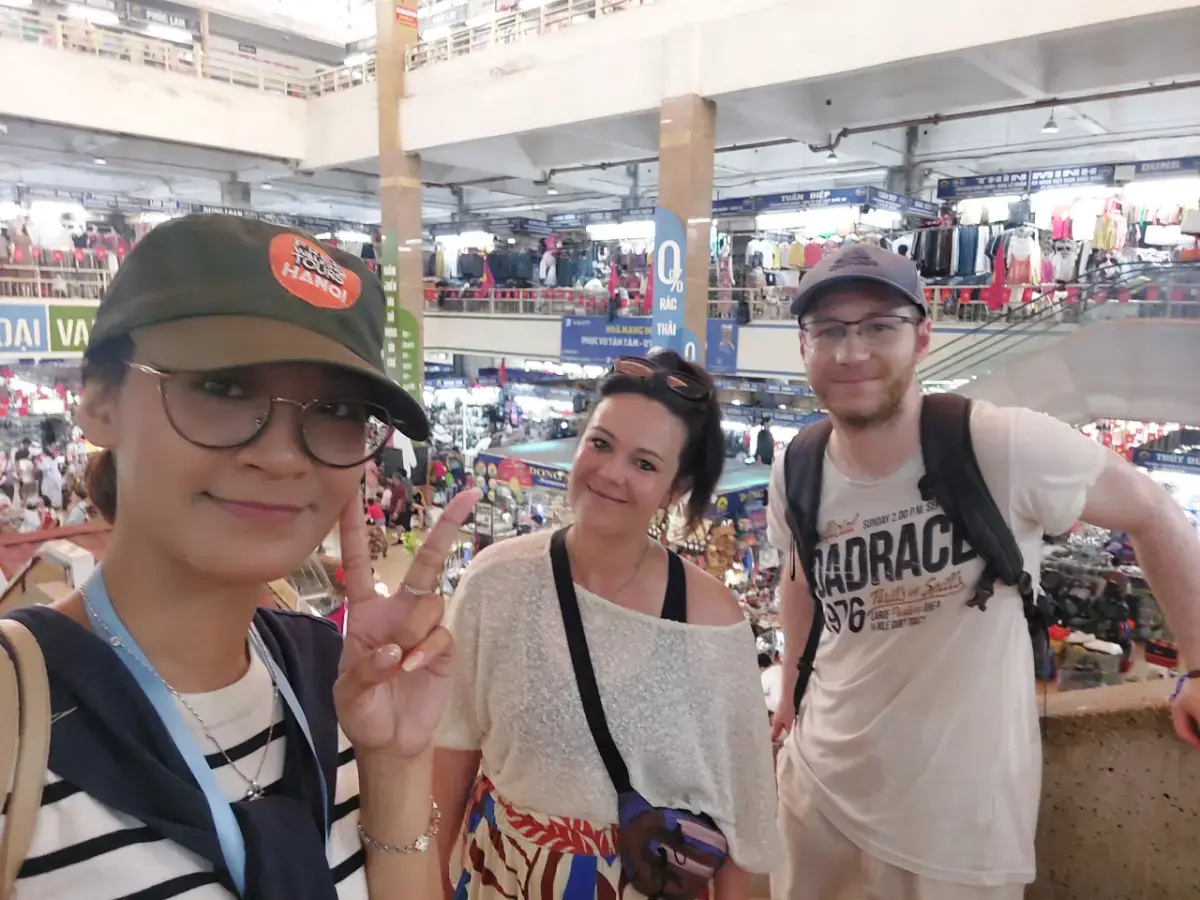
Early mornings and late afternoons often give clearer sightlines along narrow lanes, but there is no single “quiet hour” — market deliveries, school runs, and evening food prep all reshape the street. Pair this read with Hanoi on foot for seasonal pacing, and with Dong Xuan Market when your route includes wholesale halls and upper-floor browsing.