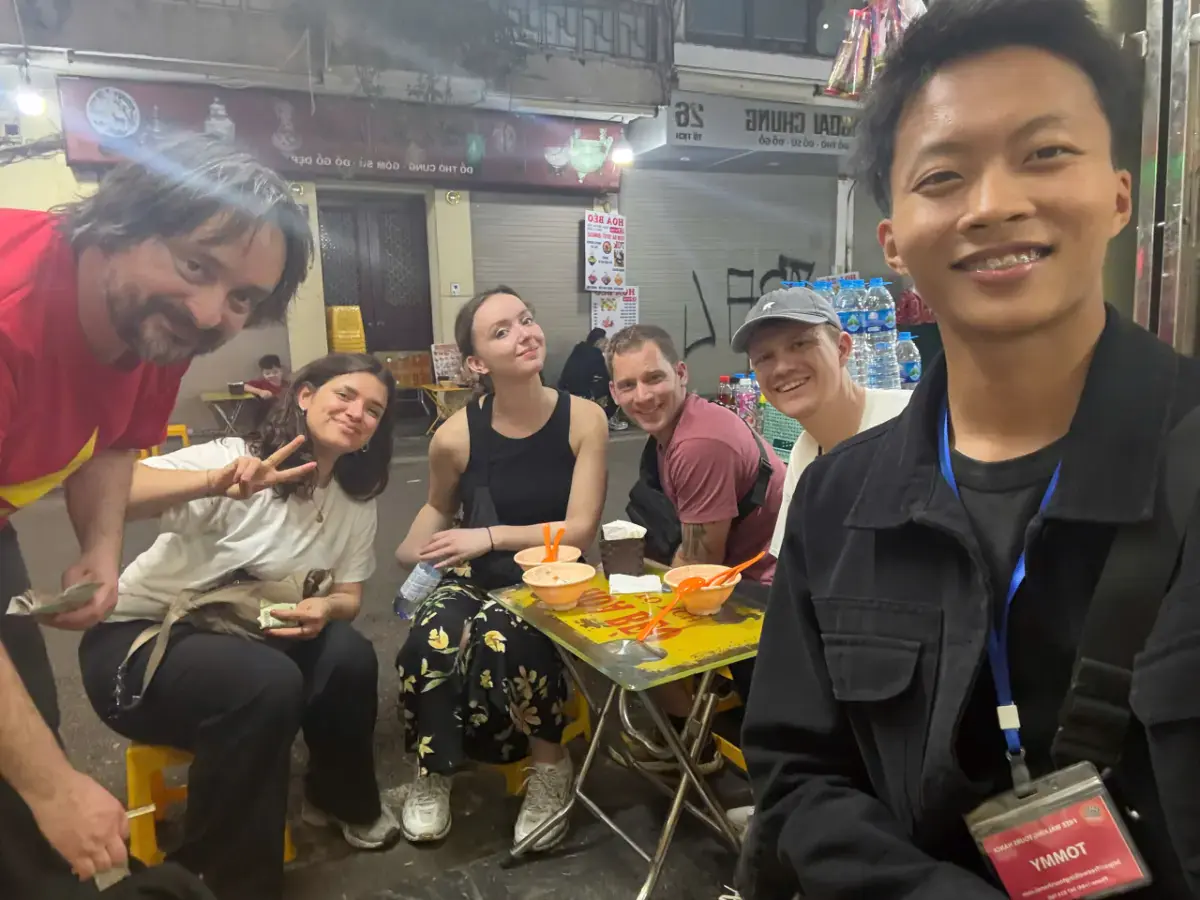
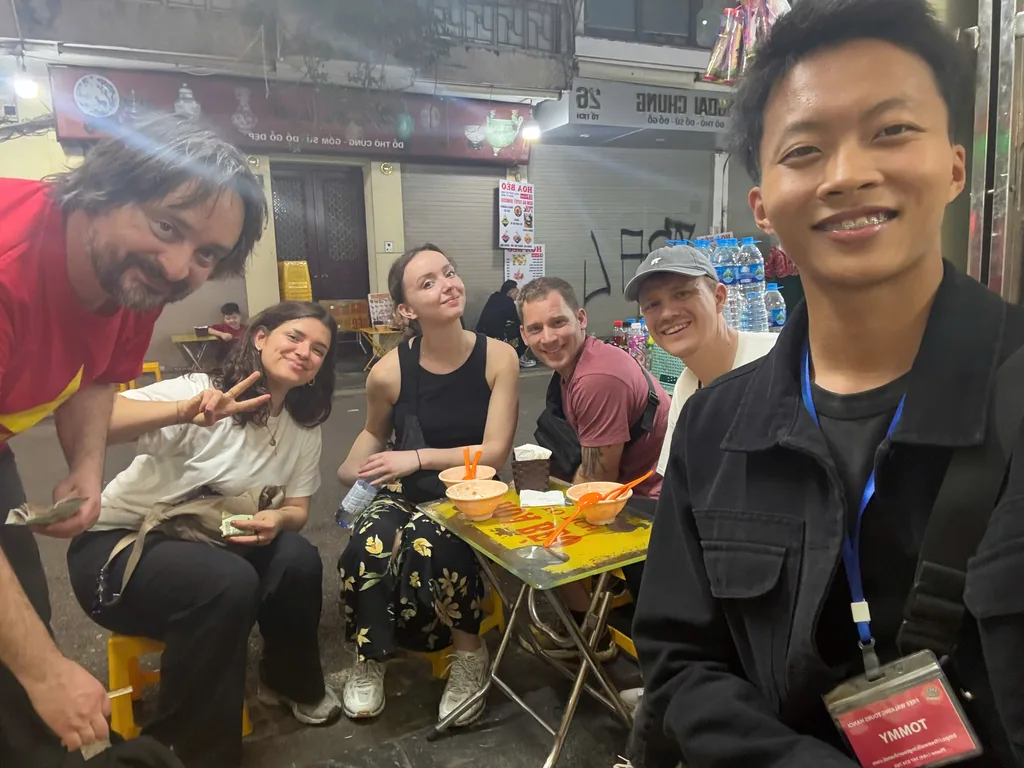
Street food in Hanoi is not only about what is in the bowl. Many stops are sit-down pauses at plastic stools, low tables, and shared condiments — often on a pavement or in a shallow shopfront with the kitchen at the back. Recognising that setup helps you choose confidently, pay the right person, and leave room for the next tasting.
This article explains visible table cues, not a ranked list of vendors. For dish names and when they are commonly eaten, use our Top 10 Hanoi street food guide and the wider Hanoi street food knowledge hub. For a guided walk with timed stops, see the Hanoi Street Food Tour.
Low tables, shared centre, individual bowls
A typical stop places a cluster of small bowls or plates in front of each diner, with herbs, lime, chilli, and dipping sauce in shared reach. Chopsticks may come wrapped or in a communal jar — use what the stall provides, and ask if you need a clean set.
Grilled items such as bun cha often arrive as separate components: noodles, broth, herbs, and meat. You assemble bites at the table rather than receiving one finished plate. That layout is a useful signal that you are at a bun-cha-style stop rather than a banh mi counter or drink-only café.
Who to pay and how stops chain together
On a self-guided walk, pay the vendor who served your table before you leave. On an organised food walk, the guide will explain which stops are included and where guests order extras directly — policies differ by tour format, so read the booking page rather than assuming everything is prepaid.
Stops are usually short: eat, pay, move. The gaps between tables are part of the route — narrow lanes, brief waits while something grills, and a change of street texture. Treat those transitions as pacing, not delays.
Hygiene and comfort without guesswork
Choose stalls with turnover: a steady queue, fresh herbs replenished, and hot food moving quickly. Boiled utensils or a rinse station at the counter are common; use them if offered. If you need a less spicy or lighter option, point at the chilli pot or ask for fewer herbs — most vendors are used to adjusting.
Seating is part of the experience: low stools can be awkward if you have knee or back constraints. It is acceptable to stand briefly at quieter stalls or to skip a stop and rejoin the group — better than forcing an uncomfortable seat. For evening-specific rhythm and lighting, pair this read with Hanoi on foot.