
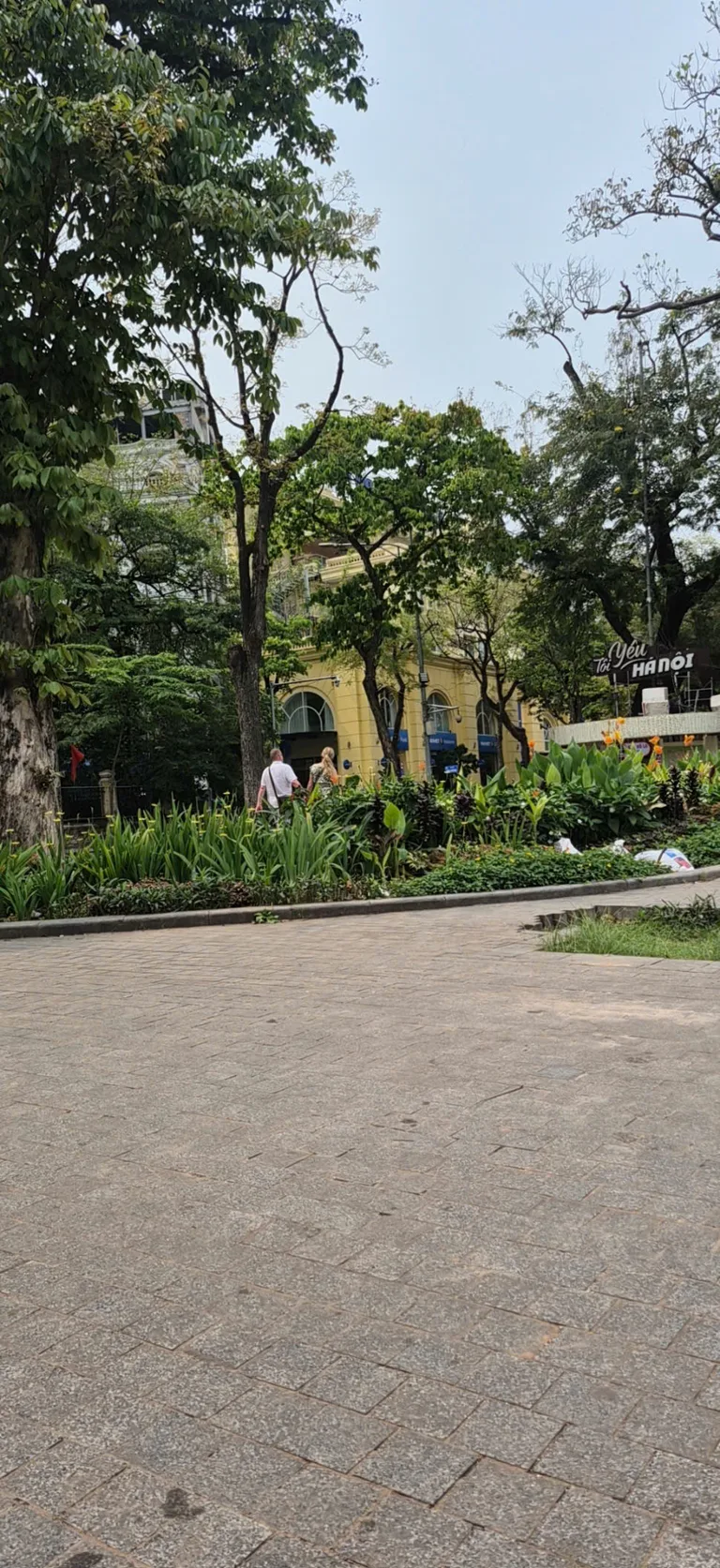
This Hanoi French Quarter walking guide begins at Hoan Kiem Lake, where the compact streets of the historic centre open into larger blocks, civic buildings, hotels, and tree-lined sections. The district is not a sealed architectural museum: offices operate, worship continues, hotels receive guests, and traffic still controls the pace of every crossing.
Use the route in two layers. The short version links Ly Thai To Garden, Trang Tien, the Hanoi Opera House, and the Metropole exterior before returning to the water. It covers roughly 1.5–2 kilometres and suits a 60–90 minute walk. The full loop continues west through the institutional streets to Hoa Lo Prison, St Joseph's Cathedral, and the lake. Allow approximately 3.5–4 kilometres and 2.5–3.5 hours without an extended interior visit.
This page is the self-guided resource. The tip-based French Quarter Walking Tour (also known as Free Tour of Hanoi) covers the same lake-to-boulevard story with a local guide — free to join, optional tip afterward. It is not the Old Quarter market walk; for trading streets use the Old Quarter walking guide or the Old Quarter tour.
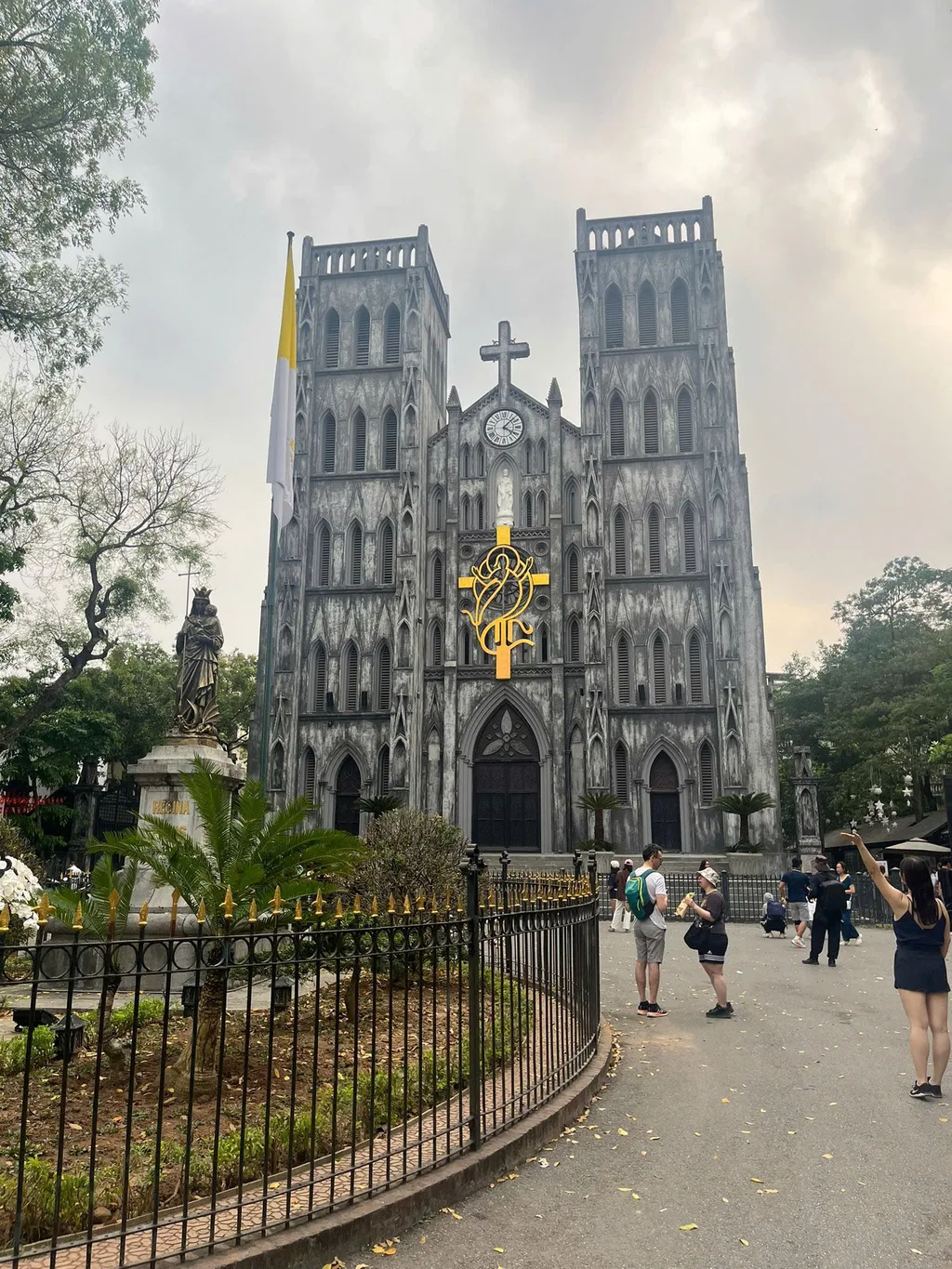
The photographs below come from Free Walking Tours Hanoi's operator library. They show visible street scenes and landmarks on typical walks. They do not record a particular departure date, guest identities, or a guaranteed stop order on your day.
Route summary: short loop or full circuit
Short route — start and end: Ly Thai To Garden. Walk south to Trang Tien, continue east to the Opera House, view the surrounding square from public pavement, pass the Metropole exterior on Ngo Quyen, then return toward the garden via Ly Dao Thanh. Distance: approximately 1.5–2 kilometres. Walking and looking time: 60–90 minutes.
Full route — start: Ly Thai To Garden; end: west side of Hoan Kiem Lake. Follow the short route to the Opera House and Metropole, continue south and west along the broader institutional streets, choose whether Hoa Lo is an exterior pause or a separate interior visit, then reach St Joseph's Cathedral and return to the lake. Distance: approximately 3.5–4 kilometres. Route time: 2.5–3.5 hours, plus any ticketed interior.
Route sequence reviewed by the operator on July 23, 2026. Distances and walking times remain approximate and can change with crossings, weather, construction, and stops. If your energy is limited, commit to the short loop first and decide at the Opera House whether the western extension still makes sense.
Planning route only, built from named waypoints. Prefer the written directions and current street conditions; the Google Maps line is not a guaranteed or field-tested track.
Stop 1: Ly Thai To Garden and the lake edge
Begin at Ly Thai To Garden on the lake's east side. It is a clearer orientation point than an unnamed corner: water is behind you, Trang Tien lies to the south, and the Opera House is east. Spend a few minutes reading the shift in scale before moving. The Old Quarter's tight merchant grid is nearby, but this route deliberately heads toward wider civic space.
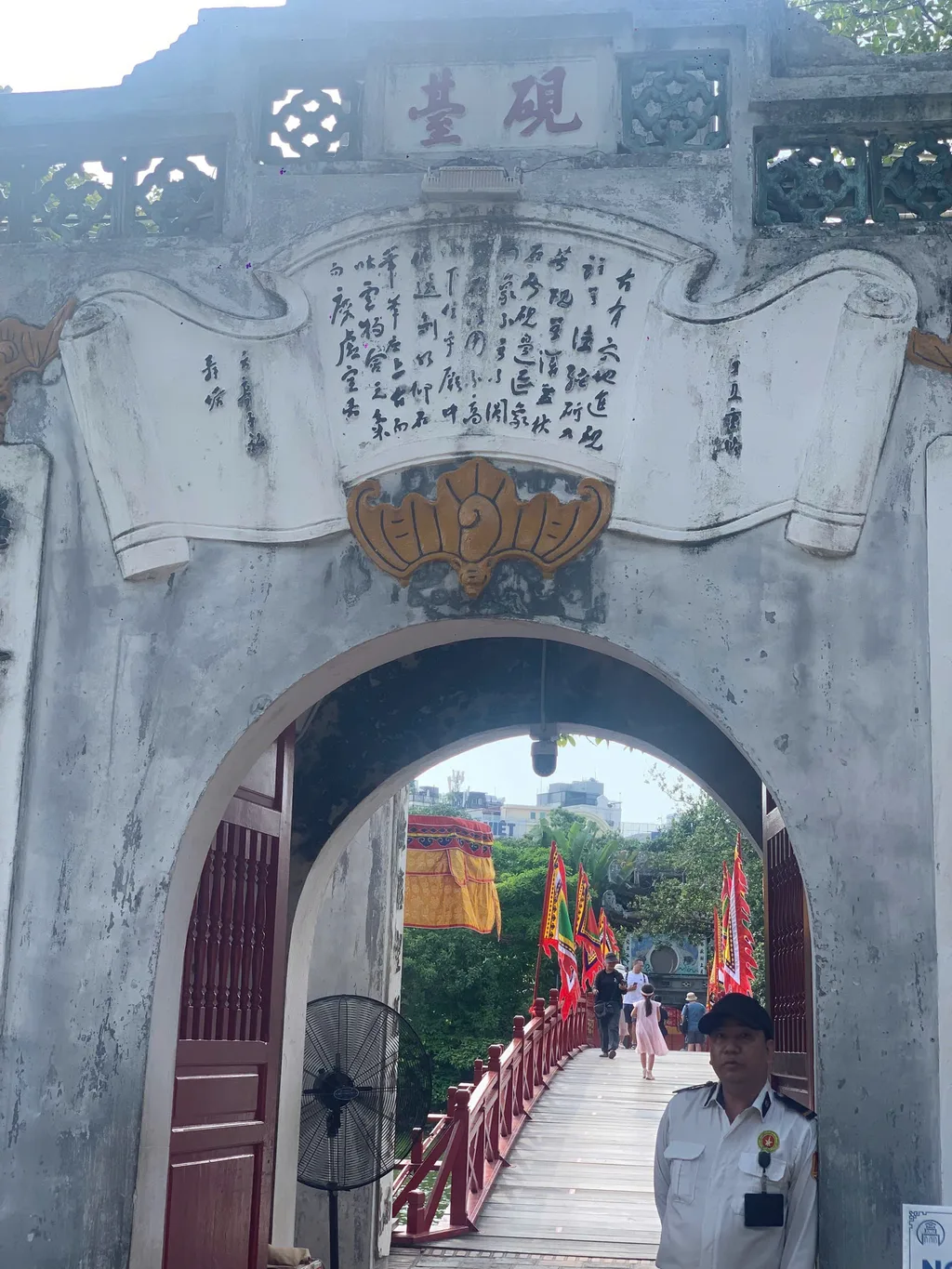
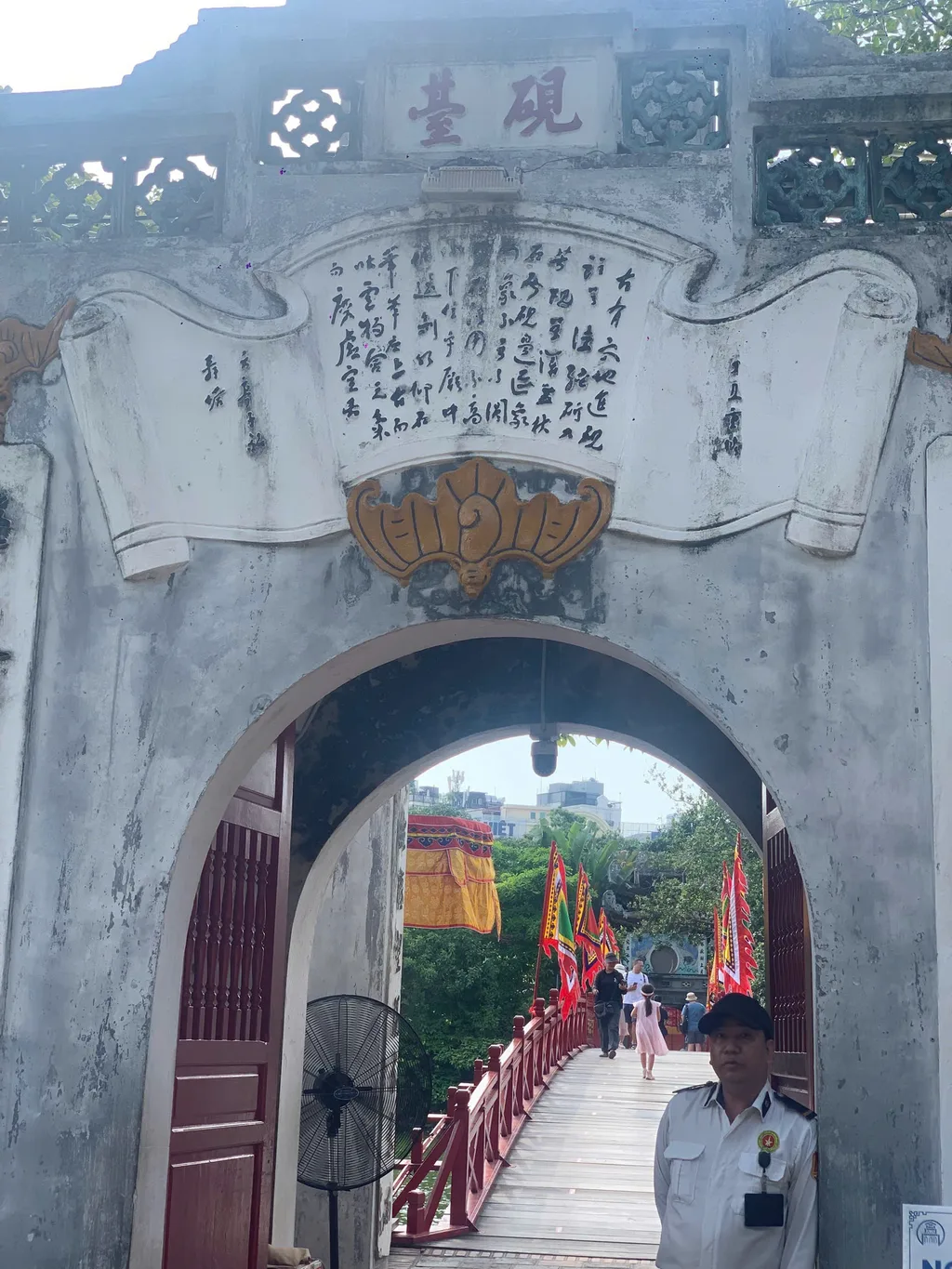
Walk south along the public lake edge until you meet Trang Tien, then turn east. Keep to usable pavement and cross at signals or marked points where available. Ngoc Son Temple and the red Huc Bridge are common reference points — temple access, tickets, and hours change; an exterior pause may be enough if you are saving time for the boulevard section.
If you book the tip-based French Quarter walk, the published meeting area is by the lake (Statue of the Fallen Heroes opposite the Huc Bridge). Confirm the pin and guide identifier in your written confirmation; do not treat this guide's map as a substitute for that message.
Stop 2: Trang Tien as the transition street
Trang Tien is the route's most legible transition. Shopfronts and cultural institutions sit along a street that feels broader than the lanes north of the lake, yet it remains busy and practical. Walk at observation pace rather than treating it as transit. Look for changes in frontage, shade, setbacks, and the way traffic occupies the larger junctions.
The direct lake-to-Opera-House section is under one kilometre. A mapping app may show a short walk, but 25–40 minutes is a more useful allowance if you stop, wait at crossings, and avoid weaving through traffic.
Compare the pavement width and building height here with a typical Old Quarter lane in the walking tour comparison — the French Quarter is not "farther away" so much as laid out on a different street plan.
Stop 3: Opera House and August Revolution Square
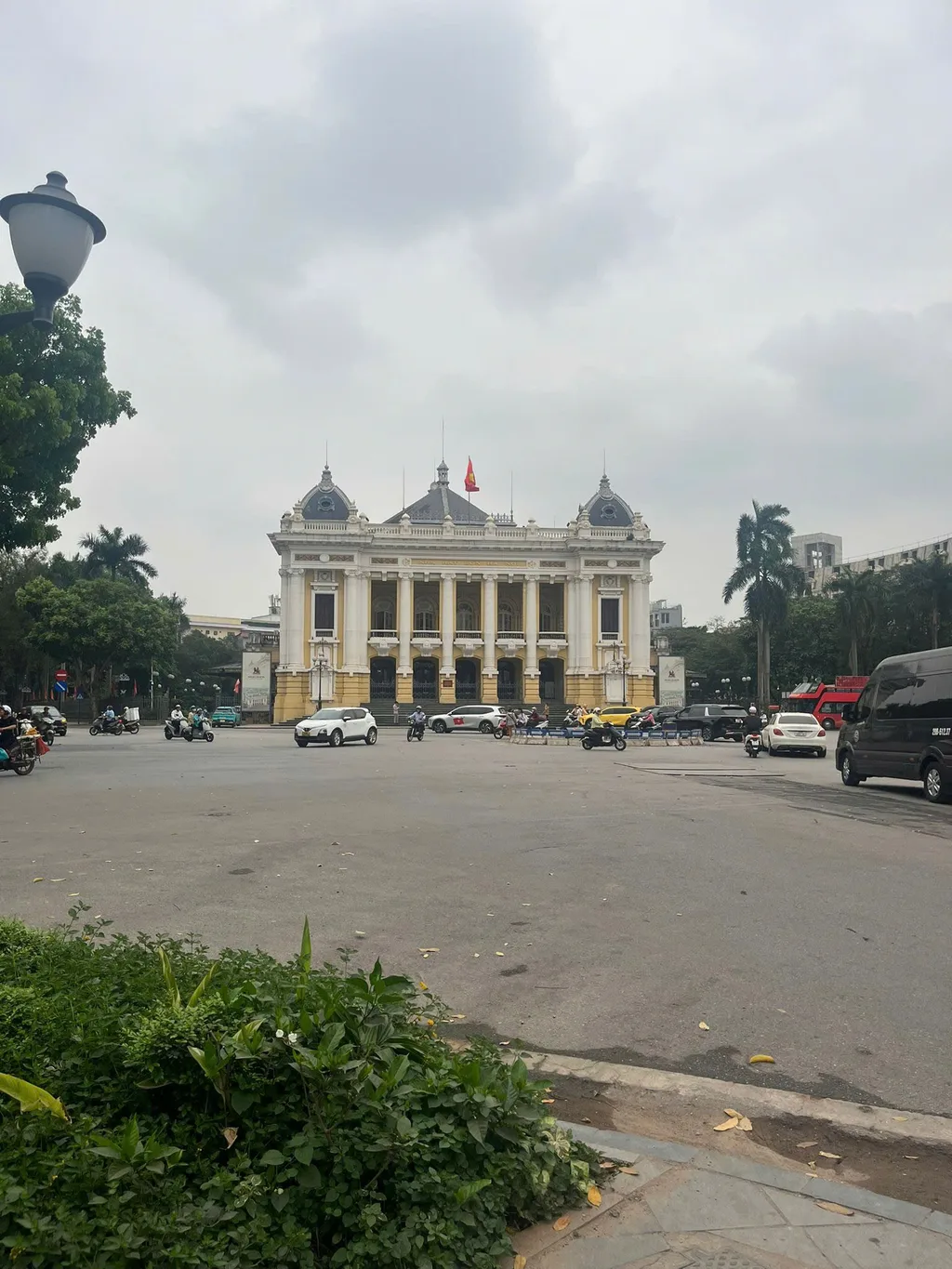
The Opera House is the visual destination of the short route and an active venue, not a guaranteed interior attraction. View it from safe public pavement, leave driveways and entrances clear, and do not assume foyer access or photography rights. Event barriers and arrivals can change where pedestrians may stand.
Use the square to compare the building with its setting rather than photographing only the façade. The scale of the junction, the approach from Trang Tien, and the nearby institutional buildings explain why this corner feels different from the Old Quarter.
Stop 4: Metropole exterior and the short return
From the Opera House, walk north-west on Ngo Quyen to the Metropole exterior. It is a working hotel, so remain on public pavement and keep guest entrances unobstructed. The purpose of the stop is the street relationship between hotel, government buildings, and the Opera House area—not access to private interiors.
For the short version, return toward Ly Thai To Garden using Ly Dao Thanh and the public streets around the garden. This closes a compact loop without repeating all of Trang Tien. If heat, rain, fatigue, or traffic has already taken your attention, ending here is good route design.
Stops 5–7: institutional streets, Hoa Lo, and the cathedral
For the full loop, continue south from the Metropole area, then work west along Ly Thuong Kiet using comfortable pavements and controlled crossings. This section is less about one landmark after another and more about the formal street plan, active institutions, and the distance between them. Keep your map available, but choose the safer side of each road over the nominally shortest line.
Treat Hoa Lo as a decision point. An exterior pause keeps the route within 2.5–3.5 hours; an interior visit needs its own time and current admission check. Do not rush a difficult historical site merely to preserve an itinerary. Hanoi history for walkers offers context before you decide.
Continue north-east toward St Joseph's Cathedral, then return to the west side of Hoan Kiem Lake through the Nha Chung and Bao Khanh area. The cathedral remains an active place of worship. Services, parish activity, and current access take priority over sightseeing, so an exterior view may be the appropriate stop.
Traffic, weather, and an honest shortcut
Traffic is most demanding at the larger junctions. Use signals and marked crossings where available, watch turning vehicles even when you have a signal, and keep a steady, visible line. If a crossing feels unsuitable, walk to the next controlled point. The full route is short in kilometres but can feel longer because every major road interrupts momentum.
In hot weather, start early, carry water, and use the short loop before the exposed part of the day. In rain, polished surfaces and painted road markings can become slippery; wait under cover, choose an indoor pause, or take a short ride. Thunder, flooding, or poor visibility are reasons to stop, not atmospheric extras.
The practical shortcut is simple: finish after the Opera House and Metropole, then return to the lake. A second option is to take a ride from Hoa Lo back to your accommodation instead of forcing the cathedral return. Things to do in Hanoi on foot explains how to combine district walks without making every connection on foot.
Self-guided or with a local guide
Walk independently when you want to pause for architecture, choose your own interior stop, or turn back with the weather. This guide gives you a route order and decision points without converting the district into a booking page.
If you would rather have a local connect the lake, civic buildings, hotel, Opera House, and cathedral while handling the street sequence, reserve the tip-based French Quarter Walking Tour on WhatsApp or by email from that page. Read how tip-based walking tours work and meeting point and preparation before you go. For heat or rain timing, use weather and walking.
Sources & last verified
Change note: 9 October 2026 — Operator photo sequence for lake-to-boulevard context; route order unchanged from July review.
- Free Walking Tours Hanoi operator route review — Route sequence checked on July 23, 2026.
- Hanoi Department of Culture and Sports: Hoan Kiem Lake and Ngoc Son Temple — Context for the lake-side start point.
- Hanoi Department of Culture and Sports: Introduction to Hanoi, capital of Viet Nam — Historical, architectural, and broader civic context for the Hanoi Opera House; not a source for current programme, opening hours, tickets, interior access, or same-day visitor arrangements.