Long Bien Bridge is a working century-old railway crossing over the Red River. Walkers come for rusted trusses, river light and the contrast between Old Quarter density and open water — but safety and courtesy matter more than a centred photograph. Read the full Long Bien Bridge place guide before you go; this Journal note fits the bridge into a morning route from Dong Xuan Market.
Rail corridors are not photo sets
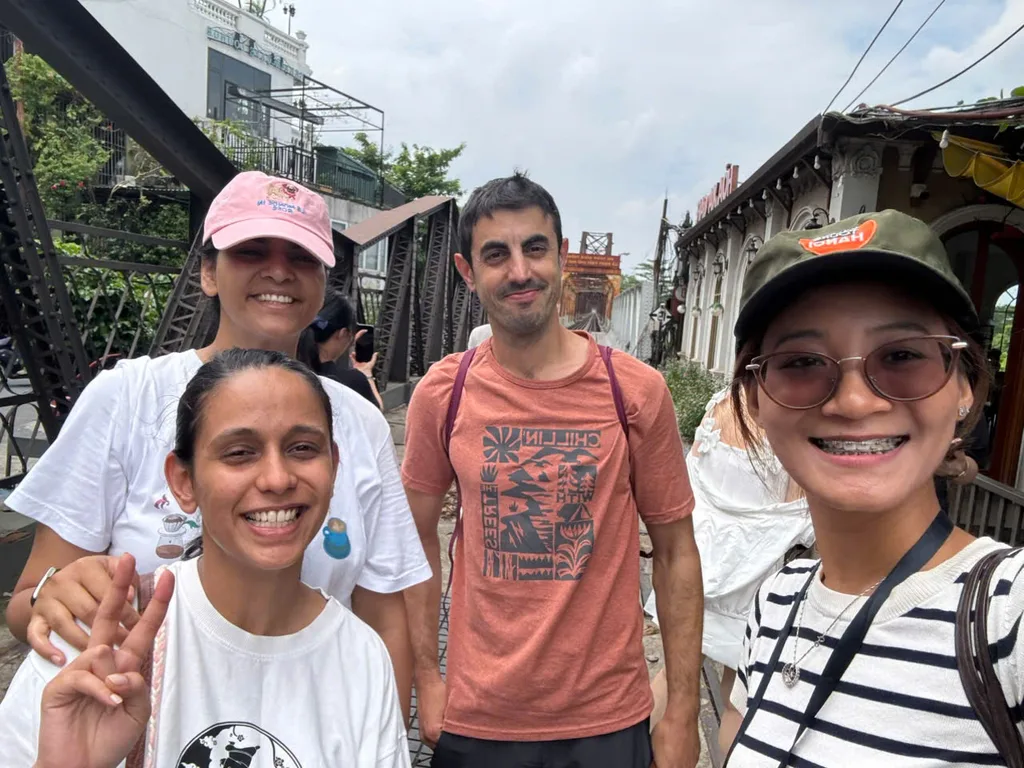
Several Hanoi walks pass working rails — beside Long Bien, near café rows, or on the narrow Train Street alleys where access rules change. The card image shows tracks beside a truss and shopfronts; it illustrates how close pavement life sits to freight and passenger lines, not a safe place to stand for a portrait.
Do not step onto rails, do not wait for a train for social media, and do not assume evening access matches what you saw online last month. If a barrier or guard redirects you, choose another lane rather than arguing at the track edge.
What you are actually walking on
Pedestrian paths sit beside active rail uses. Trains and maintenance can appear with little ceremony — stay alert, do not step onto rails, and keep children close. The surface is uneven; choose shoes with grip and turn back if weather makes exposure uncomfortable.
Pairing with an Old Quarter morning
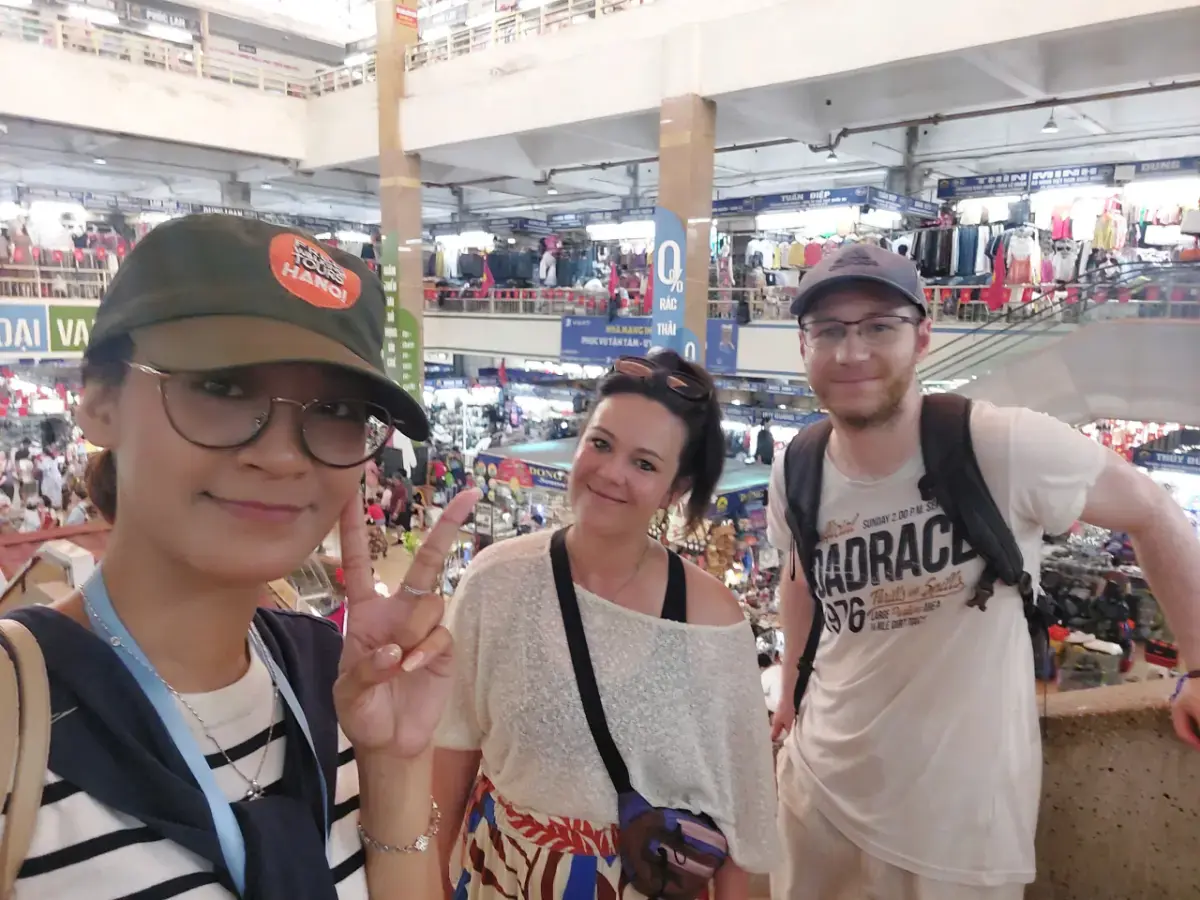
A common pattern is market energy first, bridge second: wholesale rhythm at Dong Xuan, then the eastward walk when you still have energy. The Hanoi Old Quarter Tour includes the bridge when conditions allow; self-guided walkers should mirror that flexibility rather than forcing the crossing in heat or storms.