
Ho Chi Minh Mausoleum: plan for formality and change
The Ho Chi Minh Mausoleum is the formal centre of the Ba Dinh historic area. Visiting it calls for an early start, modest dress, patience with queues and security procedures, and a willingness to change plans if official access is limited. It is not a casual drop-in attraction, and the rules are part of understanding the site.
Treat the mausoleum complex as a morning chapter. The surrounding square, gardens, and nearby historic sites can take more time than expected, especially in heat. Check current official or on-site instructions before you travel across the city for it; seasonal maintenance, public occasions, and security arrangements can alter access.
A national memorial in Ba Dinh
The mausoleum was built in Ba Dinh Square after Ho Chi Minh’s death and is a major site of national remembrance in Vietnam. Its setting connects it with the square, the Presidential Palace area, and other institutions associated with the modern Vietnamese state.
Visitors do not need to turn the visit into a political test. The practical approach is to recognise its civic and ceremonial importance, follow the conduct expected on site, and leave time to understand the wider area rather than treating the building as a single photograph.
How to arrive prepared
Dress conservatively, keep bags light, and arrive early enough to accommodate the queue and screening. Follow staff directions, keep your voice low, and do not use phones or cameras where prohibited. Requirements can be enforced strictly, so a flexible itinerary is better than an online checklist with fixed times.
If the mausoleum itself is not accessible, the morning can still hold value through the wider Ba Dinh area. The Imperial Citadel of Thang Long and Temple of Literature offer different historical frames nearby. Use First time in Hanoi to keep this western cluster separate from an Old Quarter morning.
Opening hours
- Mausoleum and complex
- Access is subject to official schedules, security procedures, maintenance periods, public holidays, and ceremonies. Confirm current details through official or on-site guidance before visiting.
Best time: early, with a backup plan
Early morning is generally the most practical time for the Ba Dinh area, before heat and crowds build. Do not rely on a historic schedule from a travel blog. Check the current status locally, and keep a museum, citadel, or coffee pause as a fallback if access changes.
Photography: follow the rules exactly
Photography restrictions can apply in and around the mausoleum. Follow all signage and staff instructions, do not use drones, and do not stage poses that obstruct formal routes or ceremonies. The most respectful photograph may be one made from an allowed public edge.
A realistic Ba Dinh morning
Arrive at the mausoleum area early, then choose one companion visit according to current access and energy: Imperial Citadel of Thang Long for capital history, or Temple of Literature for a slower courtyard sequence. Take a ride back toward the lake rather than forcing an exposed cross-city walk in midday heat.
Plan this part of Hanoi
Nearby attractions
Nearby food
Direct evidence
Recorded walks through Ho Chi Minh Mausoleum
These links come from dated walk records or guest stories that name this place. They are separate from the route relationships below.
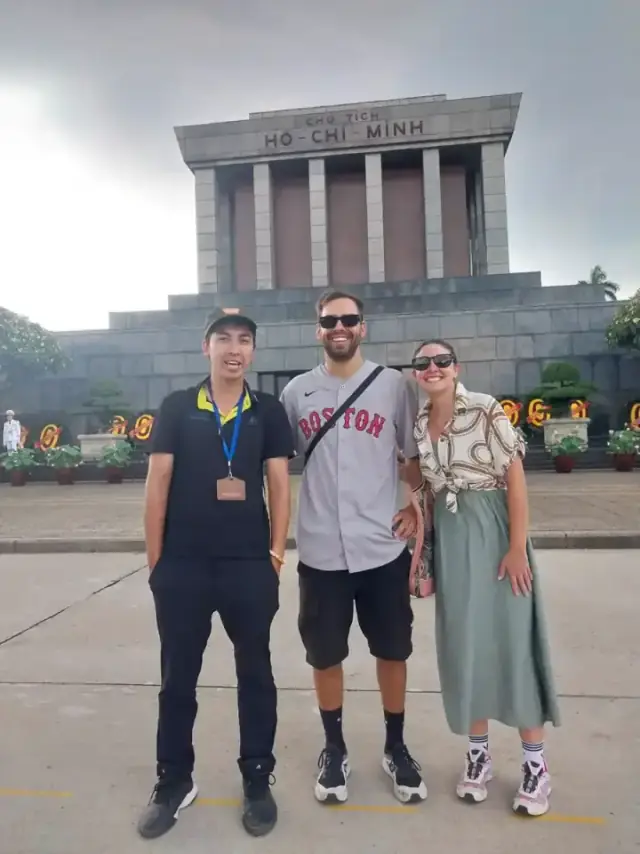
Recent real walks
Guest stories
Guides appearing in this evidence: William (Minh) · Luis (Phong)