Bánh mì is one of the easiest meals to carry through Hanoi, but it is more useful when you treat it as a pause than a prize. The bread is crisp, the filling is quick, and the stall is often part of a street already doing other things: scooters arriving, office workers stopping, a vendor preparing the next order. Buy one when you are hungry, stand where you are not in the way, and keep the rest of the day simple.
It works especially well between the lake and the Old Quarter. Start from Hoan Kiem Lake, walk until the streets become interesting rather than confusing, then stop for a sandwich before carrying on. If you are trying to understand how dishes fit the city’s daily rhythm, begin with our Hanoi street food guide. This page is a smaller guide to one portable meal.
A Vietnamese sandwich with a long history
The word bánh mì simply means bread in Vietnamese. The sandwich grew from the meeting of French-style breadmaking and Vietnamese ingredients during the colonial period, then became its own everyday form: a light baguette with savoury filling, herbs, cucumber, pickles, chilli, and sauces chosen to suit the stall.
That history is worth holding lightly while you eat. A bánh mì is not a museum object, and there is no single correct filling. One stall may focus on pâté and cold cuts, another on grilled meat or egg, and another on a vegetarian combination. The useful standard is not authenticity theatre; it is whether the bread is fresh, the ingredients are being handled quickly, and the stall is doing a version it clearly knows how to make.
What to look for at the stall
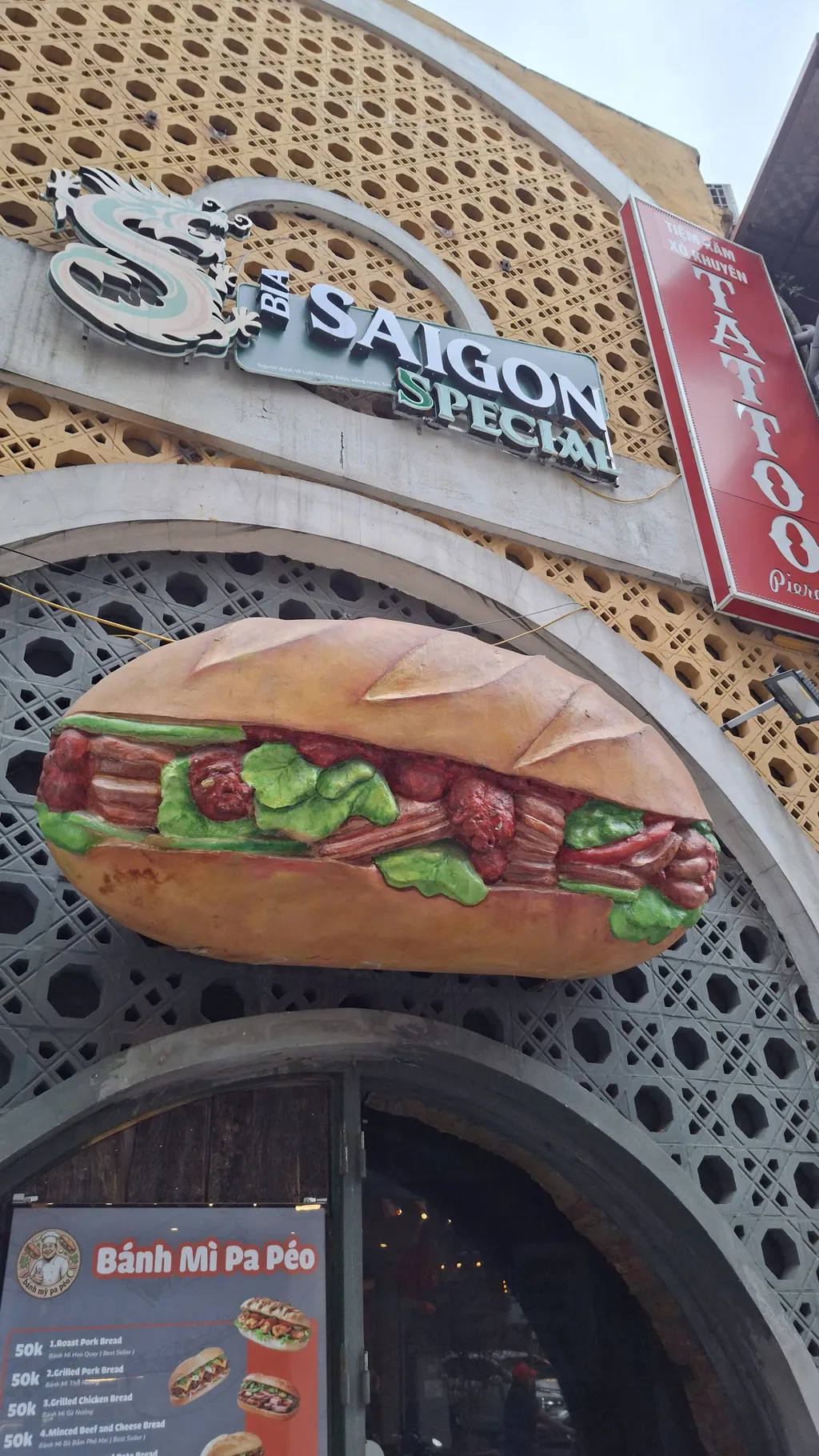
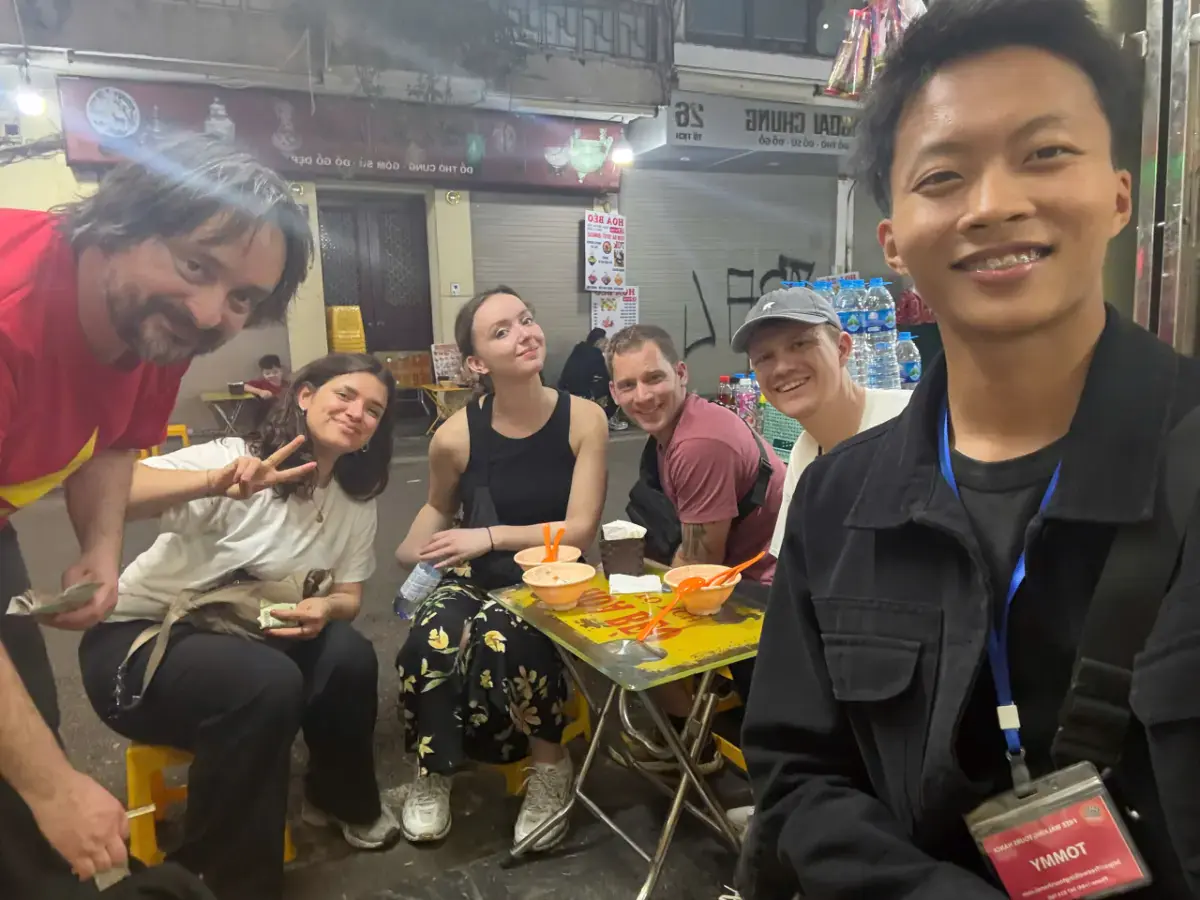
Some counters advertise with bold sculpture or painted menus above the door — read the board for fillings and price rather than assuming one national standard. The figure below shows that kind of signage; the card image above is the street context around a typical lane stop. Neither names a shop you must visit.
Watch the rhythm before you order. A good sign is a small queue that moves: bread split and warmed, fillings added with purpose, then the sandwich handed over without a long wait. Busy turnover is more useful than a famous signboard. It means the ingredients are moving and the vendor is working at the pace the food expects.
For your first order, keep it close to the house style. You can ask for less chilli if you need it, but avoid turning a compact stall into a custom-order counter. If you have a serious allergy or dietary restriction, do not assume that a quick street setup can prevent cross-contact; choose a restaurant with a clear menu and enough time to discuss it.
Eat it soon after it is made. The contrast between crackling crust, soft interior, sharp pickle, and warm filling is the whole point. Carrying it across the city for an hour turns a practical snack into a damp parcel.
Where it belongs in a Hanoi day
Bánh mì is most helpful when it keeps a walking day moving without turning lunch into a major project. Have one after a lake circuit, before a market visit, or on a day when you want a light meal rather than a long sit-down. Dong Xuan Market is a useful orientation point for the northern Old Quarter, but do not try to eat while blocking a busy aisle or delivery route.
It is also not a substitute for every other Hanoi dish. Save pho for an early, seated breakfast and charcoal-grilled dishes for later in the day. The pleasure of a food walk is that each stop has a different pace. A sandwich can be the flexible middle, not a reason to skip the meals that deserve a bowl and a stool.
Eat with a little street sense
A sandwich stall is someone’s workplace. Step aside while you decide, keep bags out of the scooter line, and use a bin when you find one rather than leaving paper on a ledge. If you want a photograph, ask before aiming a camera into the preparation area and do not hold up the queue for a frame.
For a guided introduction to the dishes and streets that make up an evening food walk, the Hanoi Street Food Tour is the relevant option. Go independently when you want the freedom to follow your appetite; take a guide when you want help reading the menu, timing, and neighbourhood around the stall. Both work better when you leave room for an unplanned stop.