
Sapa Trekking Day Tour
The north of Vietnam looks like nowhere else on earth. Walking is the only way to understand it.
The north of Vietnam looks like nowhere else on earth. Walking is the only way to understand it.
The terraces were cut by hand. Generation after generation, the Hmong and Dao and Tay people carved steps into the mountain slopes of northern Vietnam until the hillsides became something that defies easy categorisation — agriculture that looks like architecture, farmland that photographs like landscape painting, a human reshaping of the natural world so gradual and so total that the two things have become inseparable.
Sapa does not reveal itself from a viewpoint or a vehicle window. It reveals itself on foot, at the pace of the communities that built it, walking the paths they walk every day.
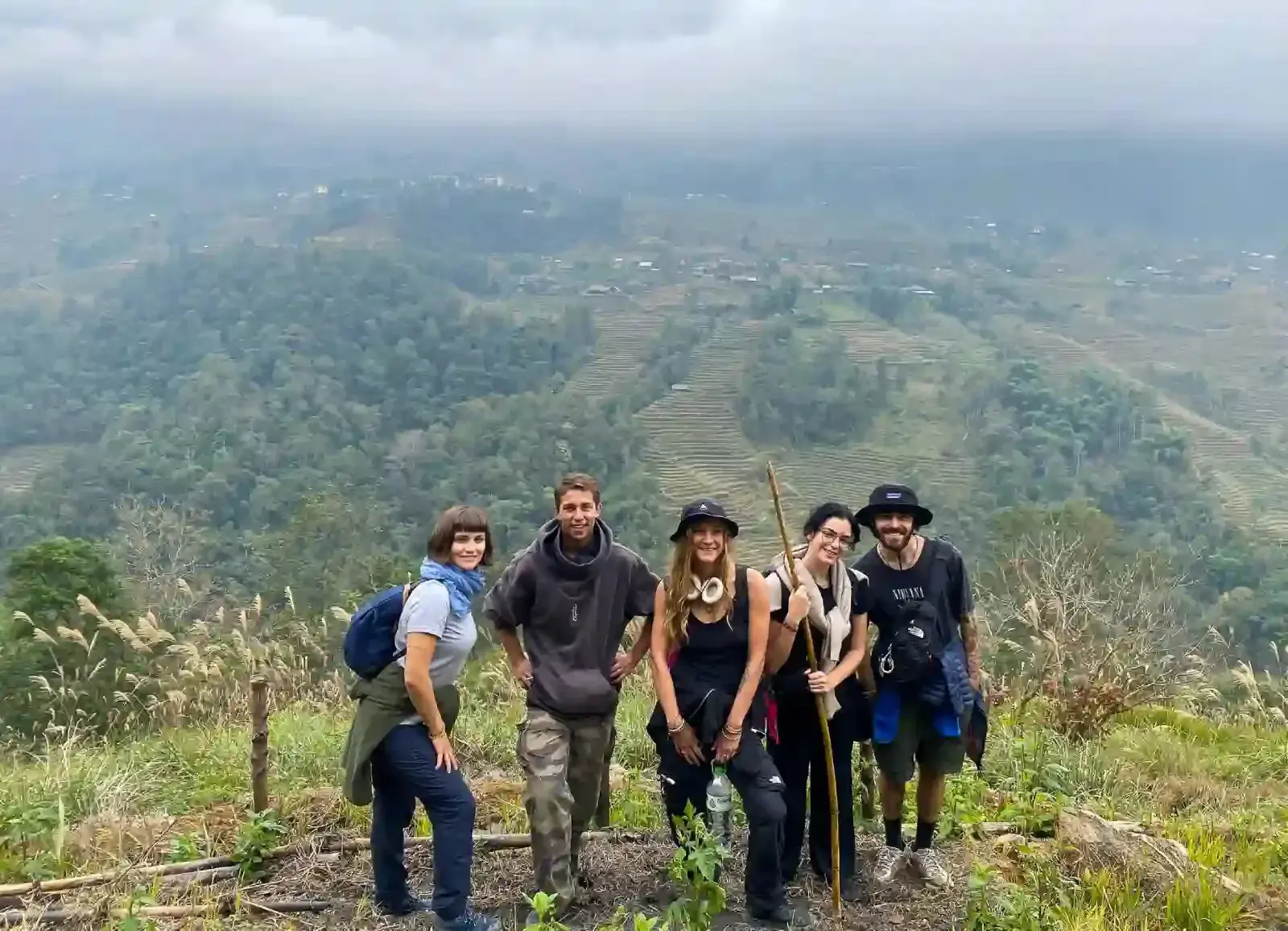
Three moments that stay with you.
The Terrace in the Morning Light
The rice terraces of Sapa do something different in every season and every hour. In the morning — before the clouds drop into the valleys, before the light flattens — the steps of the terraces catch the sun at an angle that makes each one a separate plane of colour. Green, gold, or the mirror-flat silver of flooded planting season depending on when you are here. Your guide stops at a point that no signpost marks. You stand there for a moment that no photograph will fully retrieve. This is, consistently, the thing people mention first when they describe the day.
Inside a Hmong Village
The path descends into a valley and the village appears gradually — first the sounds, then the smoke from cooking fires, then the houses themselves, built from materials the mountain provides, positioned with the logic of people who have lived in this specific landscape for longer than the concept of tourism has existed. A woman is weaving outside her door. Children are doing something energetic that requires no translation. Your guide, who knows these communities and is known by them, makes introductions that are genuine rather than staged. You are a guest. The village receives you as one.
The Valley Opens
Somewhere on the trail — and the specific moment shifts with the route and the weather and what the clouds are doing — the path rounds a ridge and the valley below opens completely. Rice terraces stepping down to a river. Village rooftops visible between the trees. Cloud moving through the mountain gaps at eye level. The scale of the northern highlands becomes suddenly, fully comprehensible. Most people stop walking without deciding to. The view makes the decision for them.
"Our guide grew up in the valley we were trekking through. She knew the names of the farmers we passed. She knew which house made the best rice wine and which family had just had a child. That knowledge — that belonging — transformed what we were seeing from beautiful scenery into something that felt like an actual place with actual people in it."— Helena & Marc, Zurich, Switzerland
How the day unfolds.
From Sapa Town
Your Free Walking Tours Hanoi guide meets you in Sapa. Before the trail begins, a brief orientation — the route, the terrain, what the day holds, what to watch for. Your guide reads the conditions: the cloud level, the trail state, what is happening in the villages along the route that particular morning. The day is planned but not rigid. The highlands reward guides who know when to follow the map and when to put it away.
Into the Heart of the Valleys
Not a marked tourist trail. A route through the landscape your guide knows from the inside. The path descends from Sapa Town into the valley system that makes the region extraordinary — the Muong Hoa Valley and the surrounding ridges and settlements that most visitors see from a distance and most trekkers experience only partially. The trail passes through rice terraces at every altitude, mountain streams and valley floors, Hmong and local ethnic minority villages, local homes and daily life, and panoramic viewpoints where the valley below becomes fully visible.
Ethnic Minority Culture & Traditions
Experienced, not observed. The Hmong, Dao, Tay, and Giay communities of the Sapa highlands have maintained distinct cultural traditions — textile techniques, agricultural practices, festival customs, spiritual beliefs — that represent some of the most intact indigenous culture in Southeast Asia. Your guide bridges this world and yours with fluency and genuine respect: explaining what you are seeing without reducing it to spectacle, facilitating interactions that are honest rather than performed.
Local Lunch
Lunch is taken in the highlands — at a local family restaurant or community eatery along the route, the kind of place that serves what the mountain produces: fresh vegetables from garden plots, free-range eggs, rice grown in the terraces you have been walking through all morning, local herbs that have no name in English but taste of the altitude they came from.
The Return to Sapa Town
The trail climbs back toward town as the afternoon light changes the colour of the terraces again. Your guide walks alongside — available for conversation about what the day raised, or comfortable with the particular silence of people who have spent a day in a landscape that earns quiet. Either is offered. Neither is imposed.
Everything the trek requires. Nothing that pads it out.
The specific route, villages, and viewpoints may vary by season, weather, and trail conditions. Your guide adjusts based on what is genuinely worth doing that day. The northern highlands reward this flexibility consistently.
- Private Free Walking Tours Hanoi guide — English-fluent, deep highland knowledge, local community relationships
- Full-day trek through Muong Hoa Valley and surrounding villages
- Hmong and local ethnic minority village visits — genuine, respectful, contextualised
- Panoramic viewpoints across the rice terrace valleys
- Local lunch at a family restaurant along the route
- Cultural commentary throughout — textiles, agriculture, traditions, history
- All entrance fees and trail costs
- · Private — your group only
- · Couples & honeymoon travellers
- · Photographers · slow travellers
- · Families and mixed groups
Good to know before you set out.
Fitness Level
Moderate. The trek involves genuine mountain terrain — descents and ascents on mountain paths, uneven surfaces, occasional stream crossings. A reasonable base fitness level and comfort with walking for several hours is needed. Your guide sets the pace and can adjust the route based on how the day is going. This is not a competitive challenge. It is a walk through one of the world's most beautiful landscapes, at the speed the landscape rewards.
Trail Conditions
Sapa's trails change with the season and the rain. Some sections can be slippery after wet weather. Your guide monitors conditions and adjusts the route accordingly. The flexibility improves the day rather than compromising it.
What to Wear
Sturdy walking shoes or hiking boots — the most important single item. Layers: Sapa's altitude means mornings are cool, midday can be warm, and cloud cover changes the temperature quickly. A light waterproof layer is essential regardless of the forecast. The forecast in the northern highlands is advisory rather than binding.
The Seasons
Sapa's terraces change completely with the agricultural calendar. Planting season (May to June): flooded terraces reflecting the sky like mirrors. Growing season (July to September): vivid green stepping down every hillside. Harvest (September to October): gold and amber, the most photographed version of the landscape. Winter (November to March): mist, cool air, the bare terraces showing their structure. Every season is worth trekking through. Your guide will tell you what the valley is doing on your specific day.
Photography
A trekking guide who knows the route knows the light — which bends in the path open toward the valley at which hour, where the terraces catch the morning sun, when the cloud drops into the gaps between the ridges in a way worth stopping for. Ask your guide to watch for the moments. They already are.
Village Visits
Your guide has relationships with the communities along the route. The visits are genuine. Photographs of community members: always ask, through your guide, who will ask correctly in the right language. The answer is usually yes. The asking matters.
Altitude
Sapa sits at approximately 1,500 metres above sea level. The trek descends into the valleys and returns to altitude. Some visitors experience mild effects from the elevation — nothing serious at this height, but worth knowing if you are arriving directly from a low-altitude city. A day of acclimatisation in Sapa Town before the trek is worth considering if you have the time.
The highlands of northern Vietnam were built by hand, one terrace at a time.
One day. The mountains. Everything arranged.